
History of Solargraphy | Solaris Tarja Trygg and a Global Photography Experiment
Sep
The history of modern solargraphy begins around the turn of the millennium. Experiments with pinhole cameras, photographic paper and exposures lasting for months created a new form of photography in which the movement of the sun itself became part of the image. Two developments are particularly important. The first is the Solaris Project initiated in 2000. The second is the international solargraphy work developed by Finnish artist Tarja Trygg after she encountered the method in Poland in 2002. These projects helped transform a photographic experiment into an international movement involving artists, photographers, researchers and participants across the world.
What is solargraphy
Solargraphy is a form of extremely long exposure photography. A simple pinhole camera containing photographic paper remains in the same position for days, months or even years. During this time the sun leaves visible paths across the paper. As the position of the sun changes throughout the year, the paths gradually move across the image. If you want to understand the photographic process in detail, read our complete guide to solargraphy and how it works.
Photography before modern solargraphy
The idea of recording the movement of the sun did not suddenly appear in the year 2000. Artists and photographers had previously experimented with long exposures and pinhole cameras. Documented experiments from the twentieth century already explored the possibility of recording solar movement over extended periods. What changed around the year 2000 was the development of a particularly simple method using photographic paper inside small pinhole cameras combined with digital scanning. This combination made extremely long exposures easier to create, digitise and share.
The beginning of the Solaris Project
The Solaris Project is one of the central points in the history of modern solargraphy. The project was initiated in 2000 by Sławomir Decyk, Paweł Kula and Diego López Calvín. Experiments connected with the project used cameras without lenses and very long exposures to record the changing paths of the sun. The photographic paper inside these cameras was exposed for periods ranging from months to years. The resulting images combined analogue photographic material with digital processing. After exposure, the paper negative could be scanned and digitally adjusted without following the normal photographic development process. This combination of analogue exposure and digital presentation became an important characteristic of solargraphy.
Why Solaris was important
The Solaris Project demonstrated that photography could work on a completely different timescale. Instead of capturing a fraction of a second, the camera could remain open for an entire season. Light was no longer only a tool for making an image. The movement and duration of light became the subject of the photograph itself. The project also encouraged photographers in different locations to experiment with the method. This international dimension would later become even more important through the work of Tarja Trygg.
Tarja Trygg discovers solargraphy
Finnish artist Tarja Trygg first encountered solargraphs in 2002 while participating in the international photography workshop Profile 2002 in Poland. The workshop was organised by the Poznań Academy of Arts. Trygg became fascinated by the possibility of seeing something that cannot normally be observed directly. The apparent path of the sun changes depending on latitude and time of year. A solargraph could make this movement visible in a single photograph.
The famous Helsinki solargraph
One of Tarja Trygg’s best known images was made in Helsinki in 2002. A self built pinhole camera remained on a balcony for approximately 180 days. The resulting image shows a large field of curved sun paths extending across the sky. The photograph became widely circulated and played an important role in bringing solargraphy to a wider audience. It also appeared in the online gallery connected with the Solaris Project.
From one camera to an international project
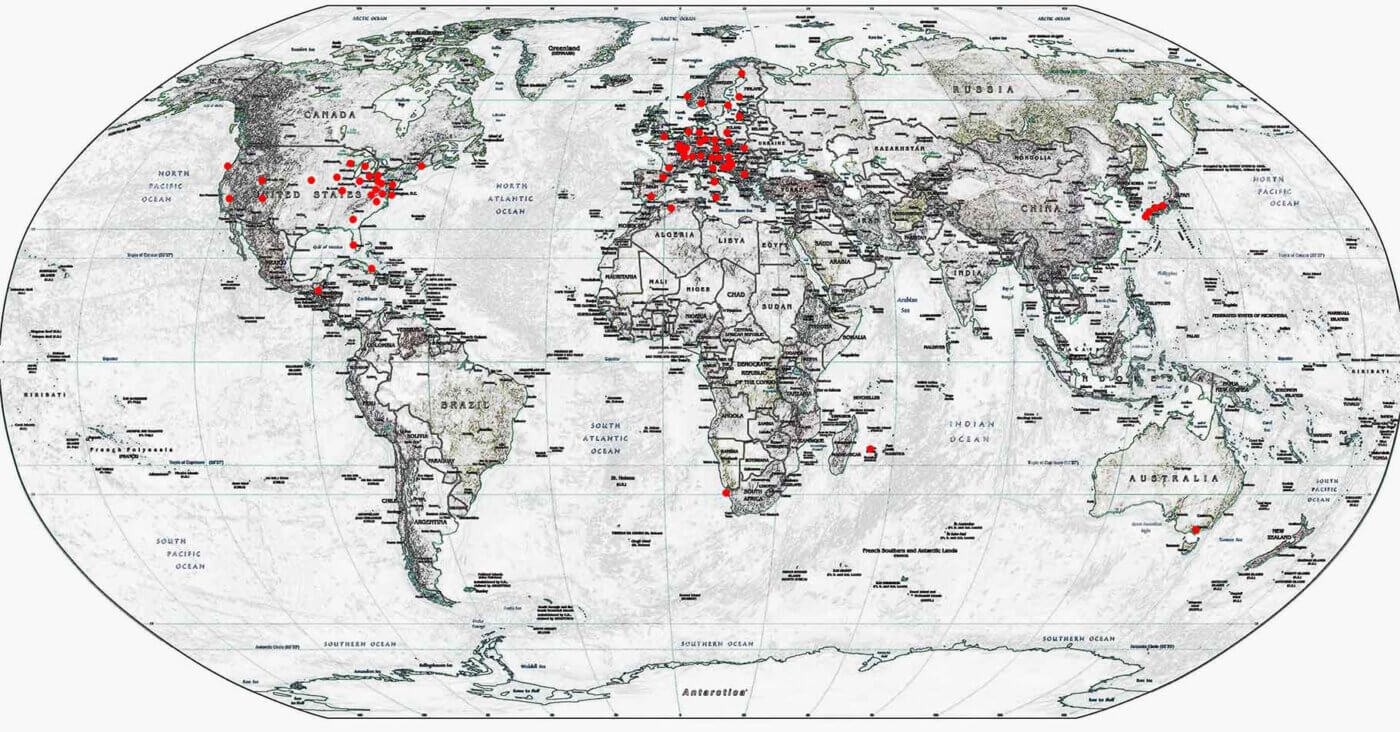
Tarja Trygg was interested in a simple question. What would the path of the sun look like when recorded from different places around the world The shape and angle of the sun paths depend strongly on geographical latitude. A camera in Finland therefore produces a very different pattern from a camera close to the equator. Trygg began sending small pinhole cameras to people in different countries. Participants installed the cameras in their own locations and later returned or shared the resulting images. This created a growing international network of solargraphy participants.
Tarja Trygg and solargraphy.com
The website solargraphy.com became closely associated with Tarja Trygg’s international project. It brought together solargraphs made at different latitudes and demonstrated how the same photographic method could produce very different images depending on geography, climate and season. The project also helped popularise the word solargraphy in English. Trygg has explained that she prefers the term solargraphy in English while using the Finnish term solarigrafia in her native language.
Solaris and Tarja Trygg are not the same project
This distinction is important when discussing the history of solargraphy. The Solaris Project was initiated in 2000 by Sławomir Decyk, Paweł Kula and Diego López Calvín. Tarja Trygg encountered the technique in Poland in 2002 and subsequently developed her own international solargraphy project. The two histories are connected, but they should not be treated as one project. Trygg’s work helped spread the technique internationally and created a network through which solargraphs from different parts of the world could be compared.
Solargraphy between art and science
Solargraphy exists between several fields. It is photography because light creates an image on photographic material. It is astronomy because the movement of the sun becomes directly visible. It can also be understood as an artistic experiment with time, landscape and chance. Researchers and scientific institutions have also used solargraphy to explore and communicate the apparent movement of the sun. Solargraphs have even been produced at astronomical observatories where the long exposure creates an unusual visual record of the sky and the surrounding landscape.
Why solargraphy spread through the internet
Solargraphy developed at a moment when digital communication was becoming increasingly important. The original exposure was analogue. The camera contained photographic paper and required no digital technology while it was outside. After the exposure, however, the image could be scanned and shared online. This made it possible for people in different countries to participate in the same photographic experiment. Solargraphy therefore combines an extremely slow method of image production with extremely fast digital distribution.
Solargraphy today
Today the basic principle remains remarkably simple. A lightproof container, a pinhole, photographic paper and enough time are still sufficient to make a solargraph. At the same time, different projects have developed their own approaches. Some focus on building cameras yourself. Others offer ready to use cameras. Some are educational projects while others understand solargraphy primarily as an artistic process.
The 7th Day and the continuation of participatory photography
The 7th Day continues the idea that a simple camera can connect people, places and long periods of time. The project uses prepared pinhole cameras containing photographic paper. Participants install their camera in a location of their choice and decide how long the exposure should last. Afterwards the exposed photographic paper is returned to the project. Every returned image is scanned and processed individually and can become part of the growing international archive. More than 13,000 people have participated in The 7th Day. The camera is therefore not only a photographic object. It is the starting point for participation in a larger artistic project. You can learn more about the Camera Obscura used by The 7th Day here.
From Solaris to contemporary solargraphy
The development of solargraphy shows how a very simple photographic principle can grow into an international form of artistic experimentation. The Solaris Project established an important foundation around the year 2000. Tarja Trygg expanded the idea through an international network beginning in 2002. Later artists, photographers, educational projects and commercial cameras continued to develop new ways of working with the technique. The fascination remains the same. A small camera is placed somewhere in the world and left alone. Months later it reveals a view of time that could never be seen with the human eye.
Frequently asked questions about the history of solargraphy
Who invented solargraphy
Modern solargraphy developed through several experiments rather than a single isolated invention. The Solaris Project initiated in 2000 by Sławomir Decyk, Paweł Kula and Diego López Calvín played an important role in establishing the method.
Did Tarja Trygg invent solargraphy
No. Tarja Trygg encountered the method in Poland in 2002. She subsequently became one of the most influential figures in spreading solargraphy internationally.
What was the Solaris Project
The Solaris Project was an artistic photography project initiated in 2000 that explored extremely long exposures and the paths of the sun using cameras without lenses and photographic material.
When did Tarja Trygg start working with solargraphy
Tarja Trygg first encountered solargraphy during the Profile 2002 photography workshop in Poland. Her well known Helsinki solargraph was also exposed in 2002.
What is solargraphy.com
Solargraphy.com became the online home of Tarja Trygg’s international solargraphy project and presented images produced in different parts of the world.
Sources and further reading
Tarja Trygg on Solargraphy at AlternativePhotography.com Aalto University research information about Solaris Aalto University information about Tarja Trygg and twenty years of solar photography
