
What is Camera Obscura?
Aug
What is a Camera Obscura? In its simplest form, it is a dark room or lightproof box with a tiny opening. Light enters through this small hole and projects an image of the outside world onto the opposite surface.
No electronics, digital sensor or complex technology are required.
There is one fascinating detail: the projected image appears upside down and reversed from left to right.
This simple optical principle has been known for centuries and became one of the foundations of photography. It eventually led from the dark chamber to the photographic pinhole camera and the cameras we use today.
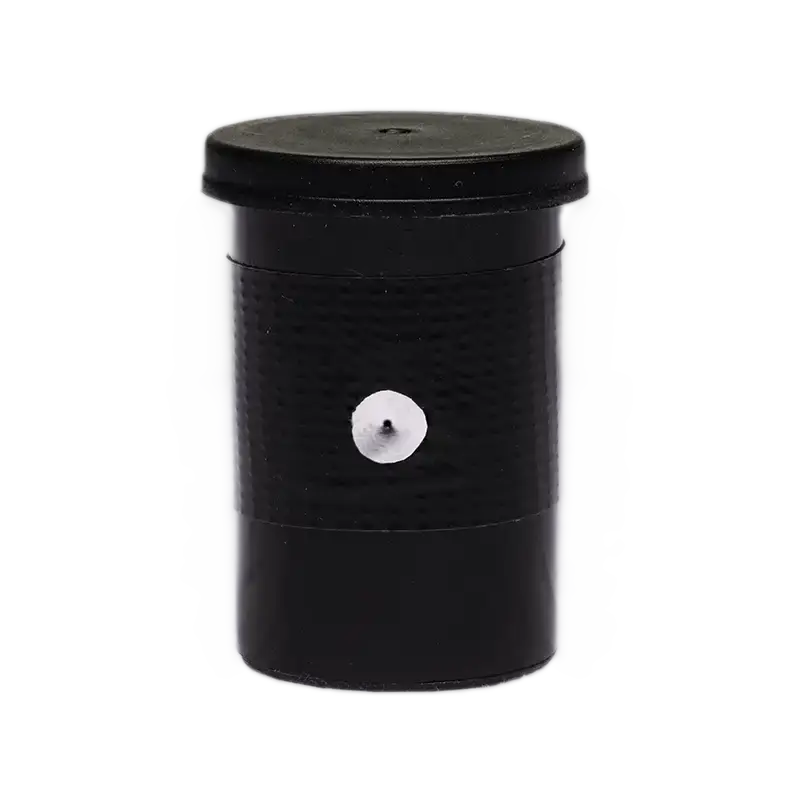
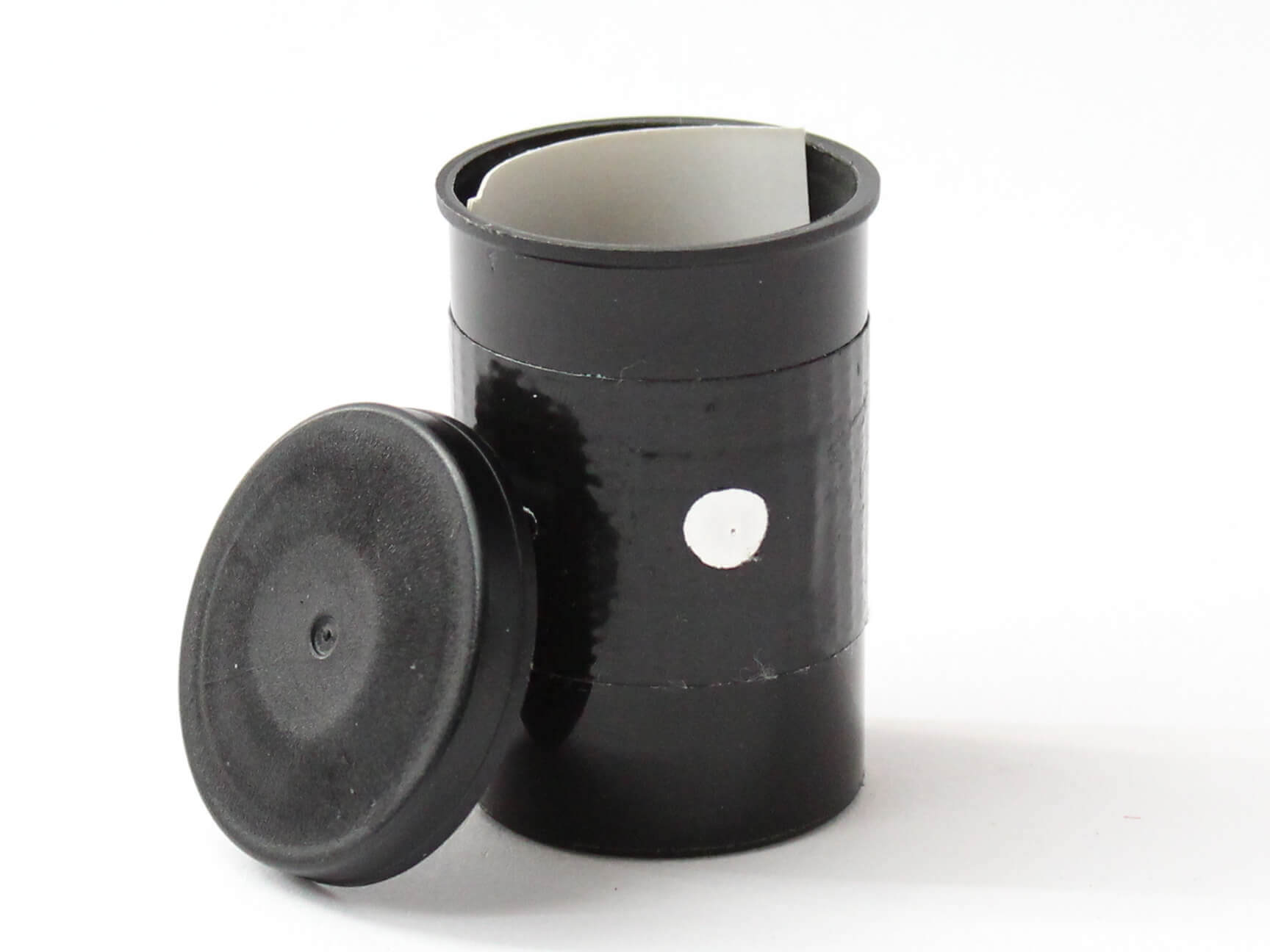
At The 7th Day, we still work with this principle. Our pinhole cameras contain no glass lens or electronics. They use only a tiny opening, photographic paper and time.
What does Camera Obscura mean?
The term Camera Obscura comes from Latin. “Camera” means chamber or room, while “obscura” means dark.
Camera Obscura therefore literally means dark chamber.
Early Camera Obscura devices could actually be entire rooms. The room was almost completely sealed from light, with only a small opening allowing daylight to enter. An image of the outside world then appeared on the opposite wall.
Over time, these rooms became smaller. Large chambers developed into portable boxes and optical devices, but the underlying principle remained the same.
How does a Camera Obscura work?
The Camera Obscura works because light travels approximately in straight lines.
Illuminated objects reflect light in many different directions. The tiny opening of a Camera Obscura restricts the amount of light that can enter the dark chamber.
The light rays cross at the opening. Light coming from the top of a building reaches the lower part of the projection surface. Light from the bottom reaches the upper part. The same process takes place from left to right.
The result is a real projection of the outside world that appears upside down and laterally reversed.
No computer, image sensor or conventional camera lens is required. A dark space, a small opening and light are enough to create the image.
Why is the Camera Obscura image upside down?
The inverted image is a direct result of the path travelled by the light.
Imagine a tree standing outside the Camera Obscura. Light reflected from the top of the tree travels through the small opening and reaches the lower part of the opposite surface. Light from the bottom of the tree travels upwards.
The light rays cross at the aperture. As a result, top becomes bottom and left becomes right.
This is one of the reasons a Camera Obscura is such a useful way to understand photography. The formation of an image can be observed directly without being hidden behind electronics or software.
Why does a Camera Obscura need a small hole?
The size of the opening affects both the brightness and sharpness of the image.
A larger hole allows more light to enter. The projection becomes brighter, but it also becomes less defined because more light rays overlap.
A smaller opening allows less light to enter. The image becomes darker, while its contours can become clearer.
However, an infinitely small hole would not produce an infinitely sharp image. When the aperture becomes extremely small, diffraction also begins to affect the light.
The ideal pinhole is therefore a compromise between brightness and image sharpness.
What is the difference between a Camera Obscura and a pinhole camera?
The terms Camera Obscura and pinhole camera are often used interchangeably today, but there is a useful distinction between them.
A traditional Camera Obscura creates a projection. You can see the image on a wall, screen or another surface, but the image is not automatically recorded.
A photographic pinhole camera uses the same optical principle but places light-sensitive material where the projection appears. This material can be photographic film, photographic paper or another photosensitive surface.
The projection can therefore become a photograph.
Put simply:
The Camera Obscura describes the fundamental optical principle. A photographic pinhole camera uses that principle to record an image.
Historical Camera Obscura devices did not always rely exclusively on a simple hole either. Later versions sometimes incorporated lenses and mirrors to produce a brighter or more convenient projection.
Who invented the Camera Obscura?
There is no single inventor of the Camera Obscura.
The optical phenomenon was observed, studied and developed by different people over many centuries.
Related observations were already known in antiquity. Centuries later, the scholar Ibn al-Haytham, also known in Europe as Alhazen, made important contributions to the study of light, vision and optics.
Leonardo da Vinci also described the Camera Obscura and compared its operation with the human eye.
Over the following centuries, the dark chamber developed into increasingly practical and portable optical instruments.
You can explore this development in more detail in our article about the history of the Camera Obscura.
What was the Camera Obscura used for?
Long before photographs could be permanently recorded, the Camera Obscura was already used in science, astronomy and art.
Artists could use the projected image as a reference for perspective and proportions. Landscapes, architecture and other subjects could be projected onto a surface and studied or traced more easily.
The optical principle was also useful for scientific observations.
In this sense, the Camera Obscura was a camera before photography existed. It could already create an optical image. What was still missing was a way to preserve that image permanently.
How did the Camera Obscura lead to photography?
The great challenge was not creating an image. The Camera Obscura had already been able to do that for centuries.
The challenge was making the image permanent.
In the early nineteenth century, Joseph Nicéphore Niépce experimented with light-sensitive materials inside a Camera Obscura. In 1816, he succeeded in producing photographic negatives, although these early images could not yet be permanently fixed.
Niépce continued his experiments and developed a different process. In 1826 or 1827, he created the photograph now known as View from the Window at Le Gras, generally regarded as the oldest surviving photograph made with a camera.
The temporary projection of the Camera Obscura had finally become a lasting photographic image.
What does a modern camera have in common with a Camera Obscura?
Centuries of technological development separate a simple Camera Obscura from a modern digital camera, but the fundamental idea is still related.
A modern camera also controls light entering a dark interior. Its lens focuses the incoming light and projects an image onto photographic film or an electronic image sensor.
The Camera Obscura reveals the same basic process in its simplest form.
That simplicity makes it one of the best ways to understand photography. An image does not begin with software, a screen or a smartphone. It begins with light.
Can a Camera Obscura take photographs?
Yes. When light-sensitive material is placed inside the Camera Obscura, the projection can be recorded photographically.
This is also the principle behind the cameras we use for The 7th Day.
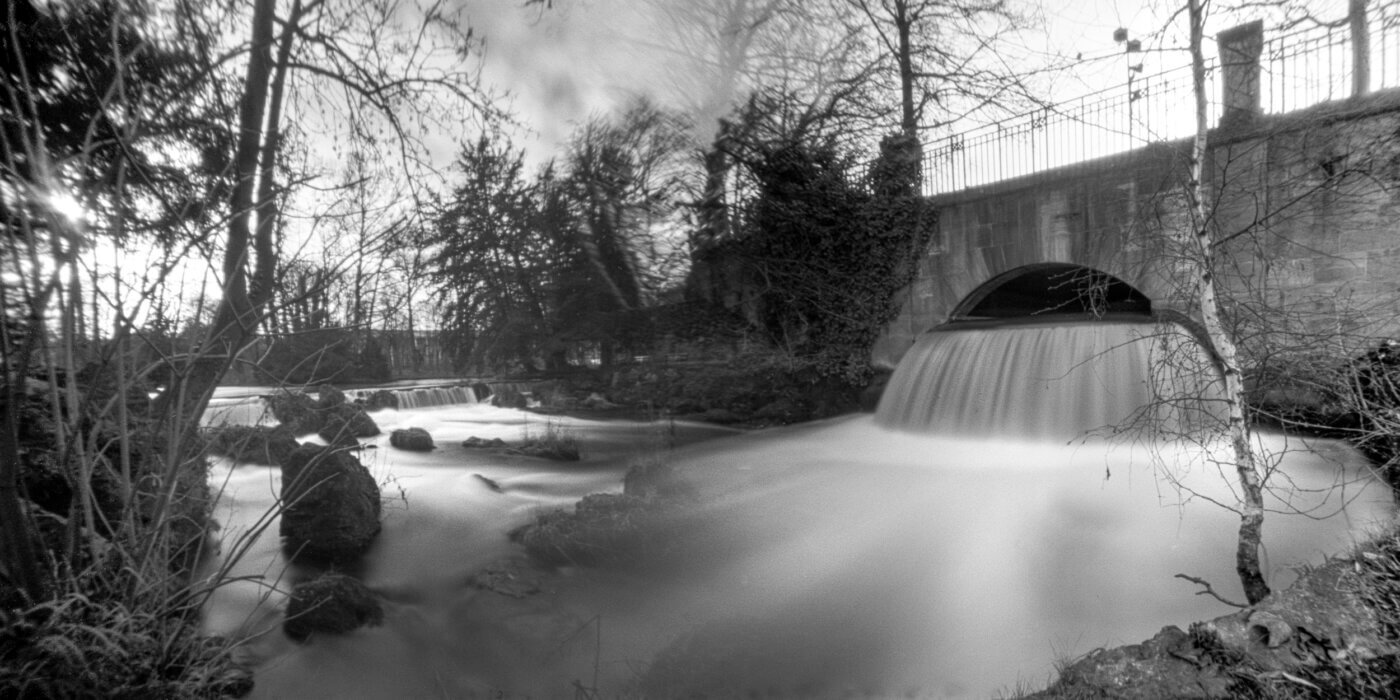
Inside each of our pinhole cameras is a piece of black-and-white photographic paper. As soon as the pinhole is uncovered, the exposure begins. Light reaches the same piece of photographic paper for days, weeks or even months.
The result is very different from a conventional snapshot.
Stationary buildings and landscapes remain visible. People, cars and other moving objects may become blurred or disappear because they are only present for a small part of the total exposure.
The movement of the sun can leave particularly striking traces across the photographic paper.
A single photograph can therefore record not only a place, but also the passage of time.
Why do pinhole cameras need long exposure times?
Only a small amount of light can pass through a pinhole. Exposure times are therefore usually longer than those required by cameras using conventional lenses.
At The 7th Day, we deliberately use this characteristic.
Our cameras can remain in the same location for days, weeks, months or even longer. During that time, the surroundings continuously change. The sun moves across the sky, people come and go, weather conditions change and the light is never exactly the same.
The final photograph compresses these different moments into a single image.
Try a Camera Obscura yourself
You can experience the basic Camera Obscura principle using little more than a dark box and a tiny opening.
If you want to record an actual photograph instead of simply viewing a projection, you will also need light-sensitive material.
Our pinhole camera manual explains in more detail how our photographic Camera Obscura works, how to position the camera and how the exposure process works.
You can also participate directly in The 7th Day. Our cameras arrive preloaded with photographic paper. You choose a location, expose your image and return the photographic paper to us afterwards.
We digitize the original negative and create the final image.
Learn more about The 7th Day pinhole camera project.

Is the Camera Obscura still relevant today?
We obviously no longer need a Camera Obscura simply to take a photograph, but the principle remains relevant.
In education, it makes basic optics easy to understand. Museums and walk-in Camera Obscura installations allow visitors to experience the phenomenon directly. In contemporary photography and art, pinhole cameras create possibilities that are very different from digital photography.
This contrast is particularly interesting today.
Modern cameras and smartphones can create hundreds of photographs within minutes. A Camera Obscura can do almost the opposite: create a single image over days, weeks, months or even years.
More than 13,000 people from around the world have already experimented with this principle through The 7th Day.
The camera may be incredibly simple, but every resulting photograph is different.
Frequently asked questions about the Camera Obscura
What is a Camera Obscura in simple terms?
A Camera Obscura is a dark room or lightproof box with a small opening. Light passes through this opening and creates an upside-down and laterally reversed image of the outside world on the opposite surface.
What does Camera Obscura mean?
Camera Obscura is Latin for “dark chamber.”
Why is the Camera Obscura image upside down?
Light travels approximately in straight lines. The light rays cross at the small opening, causing light from the top of the scene to reach the bottom of the projection surface and vice versa.
Is a Camera Obscura the same as a pinhole camera?
They use the same basic optical principle. A traditional Camera Obscura creates a projection, while a photographic pinhole camera records that projection on light-sensitive material.
Who invented the Camera Obscura?
There was no single inventor. The optical principle was known in antiquity and was studied and developed by scholars, scientists and artists over many centuries.
Can you take a real photograph with a Camera Obscura?
Yes. If photographic film, photographic paper or another light-sensitive surface is placed inside the chamber, the projected image can be recorded.
Conclusion: The Camera Obscura reveals the origins of photography
The Camera Obscura shows photography in its simplest form.
A dark chamber, a tiny opening and light are enough to create an image.
Over centuries, this simple principle developed into the photographic pinhole camera, the analogue camera and eventually the sophisticated digital cameras we use today.
Yet the Camera Obscura can still show us something modern cameras often hide: the fundamental moment when light becomes an image.
